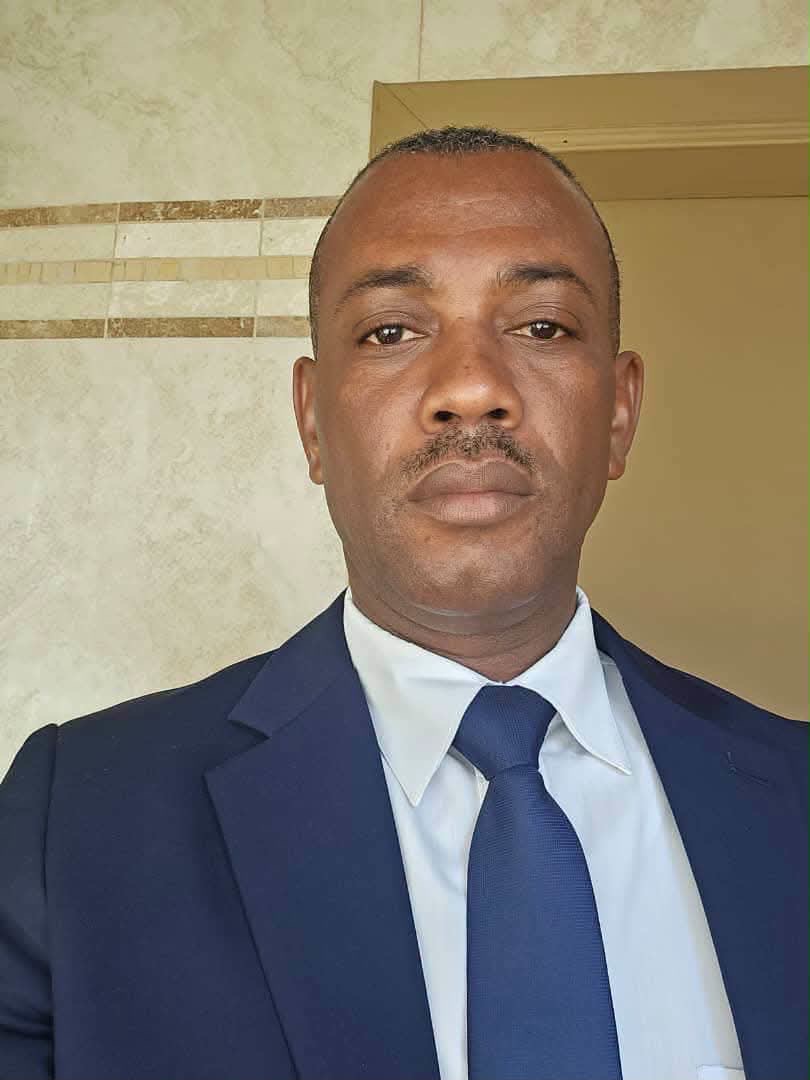
Michel Brunache
Port-au-Prince, February 12, 2026.- Invited on the air of Magik 9 this Thursday, February 12, Mr.Michel Brunache makes a clear observation: almost forty years after the fall of the dictatorship, Haiti remains in permanent transition. According to him, the current phase, marked by the removal of the CPT and the affirmation of the Prime Minister as head of the executive, is a de facto situation, supported by the principle of continuity of the state and the decisive support of the United States. He believes that the Constitution, inapplicable in the current context, is "in a garage".
For Mr Brunache, the political sequence opened after the assassination of President Jovenel Moïse on 7 July 2021 is part of a long series of unfinished transitions. In his view, the new configuration of power, dominated by the Prime Minister surrounded by the high command of the armed forces and the police, is a strong political act reflecting leadership in an exceptional context.
He maintains that the current situation cannot be strictly regulated by constitutional provisions, in particular articles 148 and 149 on presidential vacancies. In his view, these mechanisms are no longer operational in the present circumstances. « We are facing a reality not provided for in the Constitution. « , he summarizes.
"A factual situation" in the name of the continuity of the State
The former senior official recalls that the Constitution is not designed to resolve extreme crises or institutional breakdowns. In this context, he explains, the principle of continuity of the State prevails.
Thus, the Prime Minister is de facto appointed as Head of State, not because of electoral or popular legitimacy, but because he was institutionally best placed to ensure the minimum stability of the state apparatus.
For Mr Brunache, we must avoid any formalist reading: « This is not a question of constitutional legitimacy, but of political necessity. «
The central role of the United States
The intervention also highlights the decisive role of the United States as a "major voter" in the various post-1986 transitions. According to the analyst, US support weighed in the current power configuration, as was the case at other pivotal moments, notably in 2004.
However, Mr Brunache rejects the idea of a simple "American plan". Rather, he referred to a stabilization imperative with two priority objectives for 2026:
- the restoration of a minimum safety;
- the reconstruction of constitutional institutions through elections.
Asked about the references made to certain constitutional articles by the existing authorities, Mr Brunache believes that it is more a "legal glass" than a real normative application. In his view, invoking the Constitution in the current context is more of an attempt at symbolic legitimacy.
« For the moment, the Constitution is in a garage « he states, stressing that the urgency lies less in the interpretation of the texts than in the effective restoration of public and institutional order.
In conclusion, Mr Brunache made a severe diagnosis: the country's inability to establish a regular electoral rhythm and stable institutional functioning reflected a collective failure to complete the democratic transition begun in 1986.
In his view, priority should not be a theoretical debate on constitutionality, but the establishment of security and institutional conditions that would allow a return to normal constitutional order.
W.A.