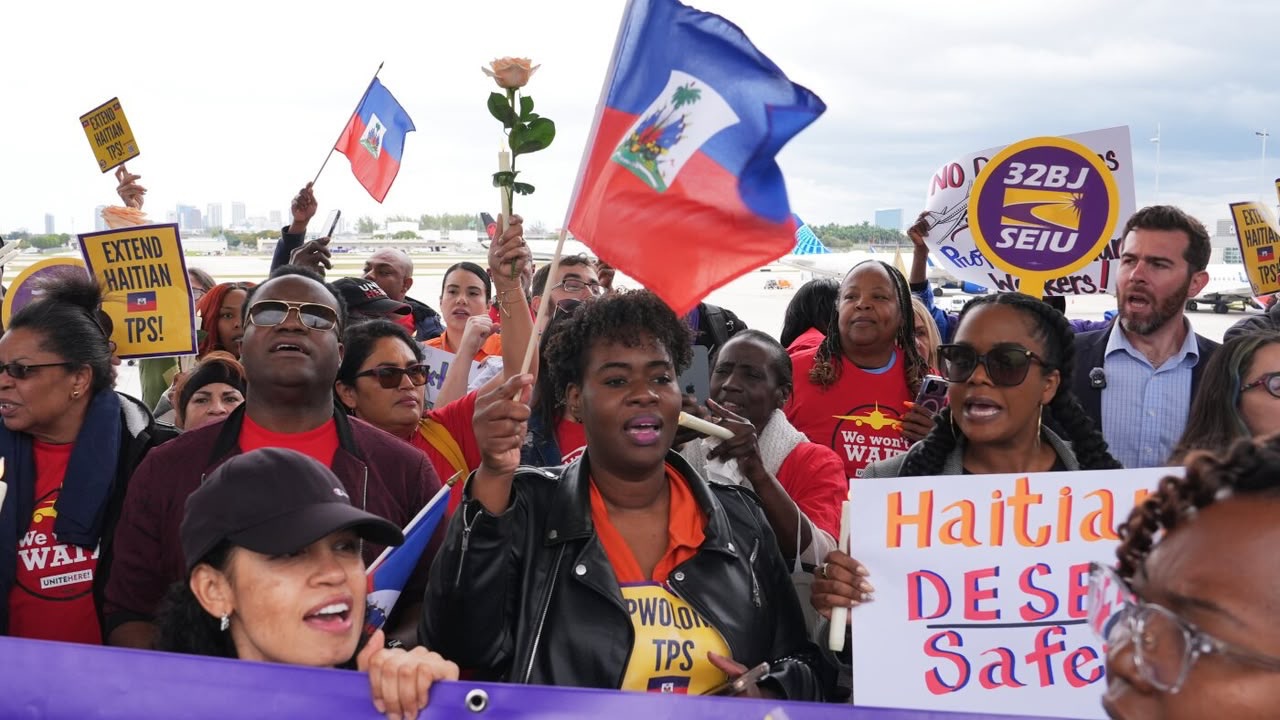
©️photo : AP
Washington, August 5, 2026.- U.S. Federal Judge Ana Reyes confirmed this Wednesday, August 5, that the suspension of the measure terminating the Temporary Protection Status (TPS) for approximately 350,000 Haitians was no longer in force. Based on a recent ruling of the US Supreme Court, this decision paves the way for the administration of President Donald Trump to fully implement the abolition of the program and relaunch deportation proceedings.
This judicial confirmation means that Haitian GST beneficiaries lose their work authorization and are now exposed to deportation proceedings to Haiti, according to lawyer Geoff Pipoly, quoted by CNN.
The consequences are already being felt in several States. In Springfield, Haitians whose TPS expires are summoned by the immigration authorities and some are forced to wear electronic bracelets as part of the surveillance measures prior to possible deportation. According to CNN, the services of Immigration and Customs Enforcement (ICE) have started targeting beneficiaries of the program, fuelling concern within the Haitian community.
Beyond the human impact, this development raises serious economic concerns. Several states, local elected officials and business leaders believe that the loss of thousands of Haitian workers is likely to exacerbate labour shortages, particularly in the health, care, hospitality and services sectors.
Employers have already begun to dismiss GST recipients who have lost their work authorization, while others are seeking to retain them for as long as legislation permits.
According to an analysis of FWD.us relayed by CNN, nearly 190,000 Haitians benefiting from the GST were employed in the United States at the beginning of 2025. Their contribution to the U.S. economy was estimated at approximately $5.9 billion per year, of which nearly $1.6 billion was paid in taxes and contributions.
Despite this setback, migrant organizations continue to fight in court. They argue that the removal of the GST is discriminatory and promises to present new elements to challenge this decision.
W.E.