Pétion-Ville, August 23, 2026.- In a Haiti facing a deep crisis, reconstruction cannot be limited to infrastructure, security or institutions. It must also involve education, the transmission of values, culture, the development of talents and the training of citizens capable of participating in the transformation of their country. It is in this perspective that RENVAH, the Renaissance of Values of Haiti, is taking place, a new non-profit association that intends to place human and Haitian values at the heart of its action.
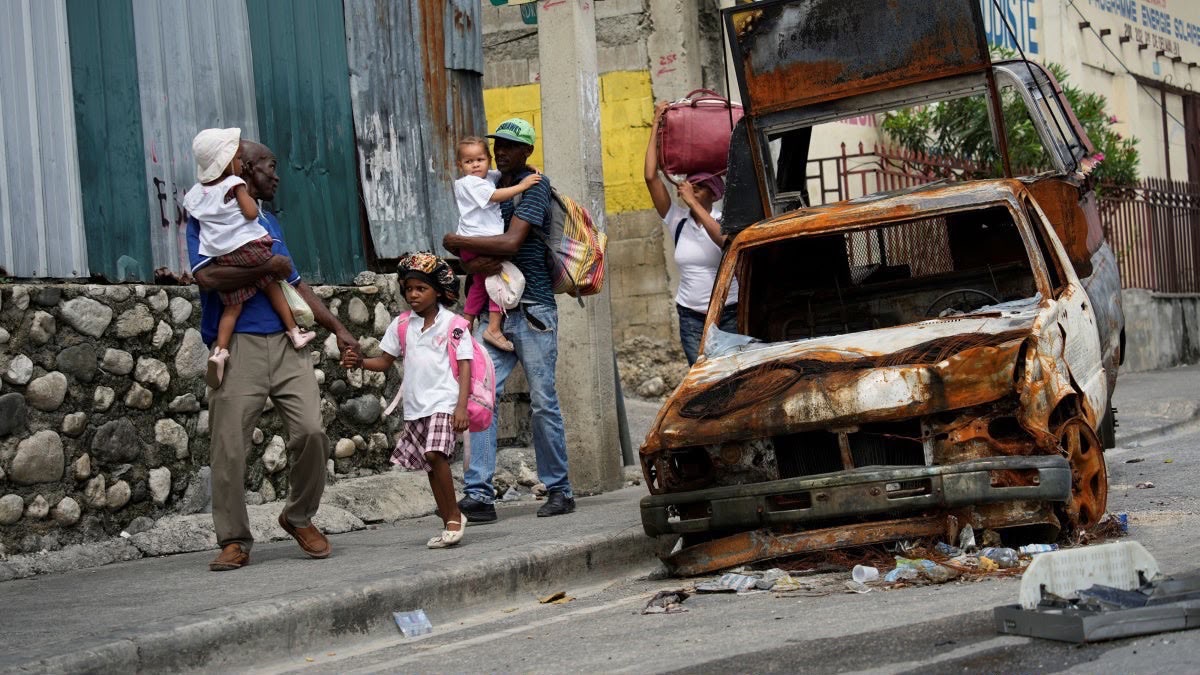
Founded on May 7, 2026 and officially launched on August 16, RENVAH presents itself as an organization committed to the promotion of Haitian culture, moral values, education, skills and talent development. According to information provided by the structure, it is now recognized by the Ministry of Social Affairs and Labour. The project works in a context where young people and children are particularly exposed to the consequences of violence, poverty, displacement and disruption of the education system. UNICEF estimates that, by June 2026, some 2.8 million children in Haiti were in need of humanitarian assistance and that more than 1,600 schools had been closed during the school year 2024-2025.
RENVAH therefore wants to act on a terrain that goes beyond urgency. The association aims to raise awareness among parents, adolescents and young people of the importance of values, responsibility, education and solidarity. It also aims to contribute to social equality and justice, unity and sustainable development. Its main initiatives include training, tourist visits to raise awareness of the national heritage, an online programme on education, training and education, and the creation of a library and a physical space for dialogue for young people. This is a widely shared observation in the education sector: education must help shape the knowledge, behaviour and values of new generations.
The organisation also adopts a particular mode of operation. Its direction is based on an ad hoc approach, in which each member may, at any given time, be called upon to exercise responsibilities. RENVAH presents this method as a means of fostering leadership learning, participation and collective responsibility. Politically, the association affirms its apolitical character. It claims no party and is willing to collaborate with other organizations when these collaborations serve the collective interest and reconstruction of Haiti.
In general coordination is Ms. Jérôme Gesline, presented as a dynamic and responsible young woman. It carries this initiative with a strong personal conviction and deep faith in God. His religious commitment is, according to his entourage and the presentation of the structure, one of the elements that nourish his conception of service, responsibility and community engagement. Through RENVAH, it intends to encourage a generation more aware of its responsibilities, more attached to its heritage and better prepared to participate in the construction of the country.
The challenge remains considerable. The Haitian crisis has already caused significant disruptions in education, displacement and access to essential services. UNICEF points out that nearly 1.5 million people were internally displaced by the end of 2025 and that nearly 5.7 million people were facing or at risk of acute food insecurity in early June 2026. In this context, initiatives that invest in education, culture, skills and youth participation are of particular importance.
With RENVAH, its initiators want to defend a simple idea: the reconstruction of Haiti must also begin with the reconstruction of the human being. Restoring values, developing talents, transmitting culture and creating spaces for dialogue can be levers to prepare a generation that can take part in the country's transformation. The young organisation will now have to transform this ambition into concrete and lasting results. Its launch marks a first step. The real challenge will be to make the revival of values a daily commitment to serving Haitian society.
W.A.