©️picture : Wilson Cadet
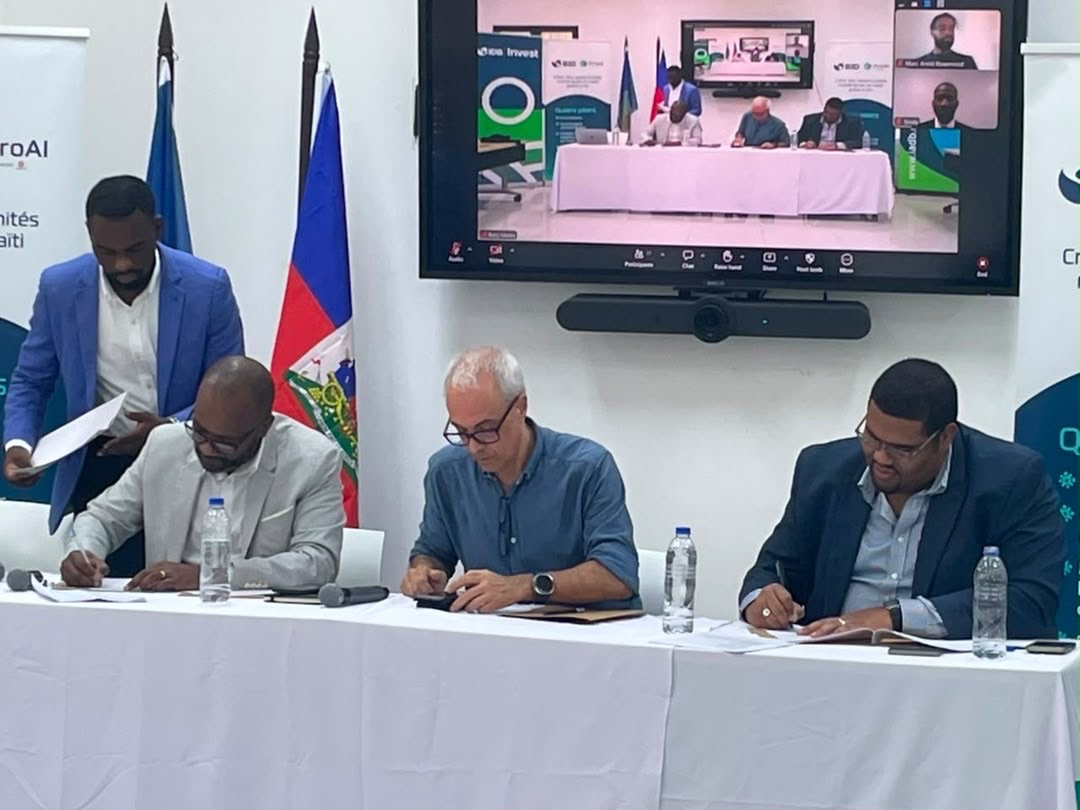
Port-au-Prince, August 13, 2026.- The signing of a collaboration protocol between Banj, ISOC Haiti, ESIH and ARAI opens a new stage in the process of developing a national roadmap on artificial intelligence. During the presentation, on Monday, August 10, in Port-au-Prince, the leaders insisted on training, data governance and the need for political commitment to enable Haiti to take better advantage of the revolution of the AI.
Artificial intelligence should not be seen only as a new technology, but as a potential lever for economic and institutional transformation for Haiti. It is one of the main ideas that emerged during the public presentation of the first work of the Program of Creation of Digital Opportunities in Haiti by the IA (ProAI). Led by Banj with the support of the Inter-American Development Bank (IDB), this initiative included the Internet Society Chapter Haiti (ISOC Haiti), the Higher School of Infotronics of Haiti (ESIH) and the Association for Responsible AI (ARAI).
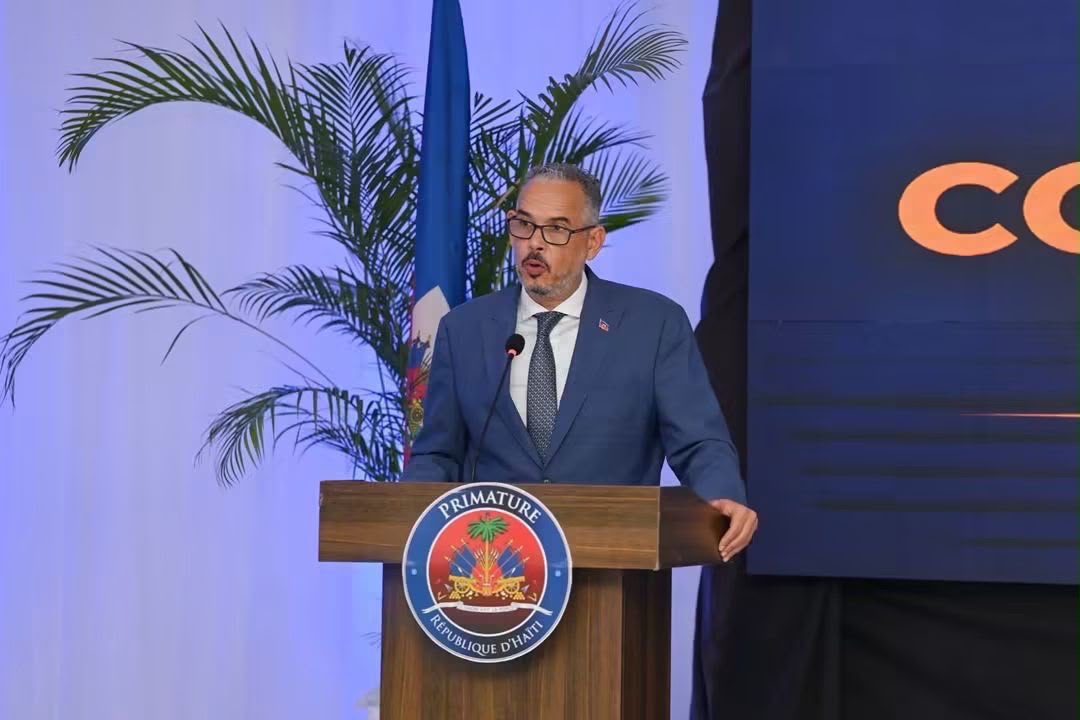
In his speech, Marc Alain Boucicault, CEO of Banj, defended a vision of the AI focused on creating new economic opportunities. In his view, the project must contribute to creating growth in the country. It must also promote a transformation in the working methods of the actors.
Digital security is also an important issue in the discussions. ISOC Haiti, a partner in the process, is involved in issues related to cybersecurity, Internet governance and responsible use of technologies. The documents presented at the conference also identify data governance as one of the fundamental elements to be taken into account in the construction of a national framework for artificial intelligence. The aim is to avoid the adoption of AI without rules adapted to the Haitian context.
For his part, Patrick Attie, Director-General of the Institute, stressed the potential already available to Haiti in the field of technology. In particular, he presented the country as an actor particularly interested in the integration of artificial intelligence into the Caribbean, referring to recent initiatives and activities that have mobilized thousands of people around these issues.
The meeting on 10 August thus marks a step in a process that has yet to expand to other sectors. The two papers presented: the mapping of the AI ecosystem in Haiti and the reference guide for the development of a national AI strategy in countries with limited resources are open to comments and contributions from public and private institutions, the education sector, civil society, the media, the diaspora and experts.
A contribution period is planned between August and September 2026, prior to the continuation of consultations in 2026-2027 and the consolidation of documents in 2027. The national roadmap for AI is announced for the period 2027-2028.

Wilson Cadet