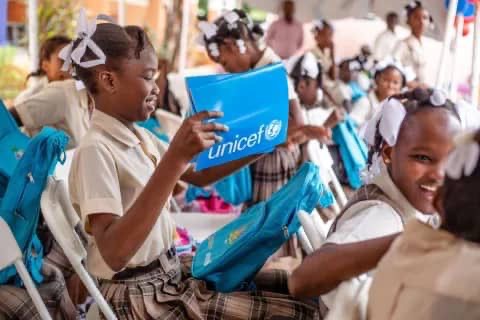
©️photo : UNICEF
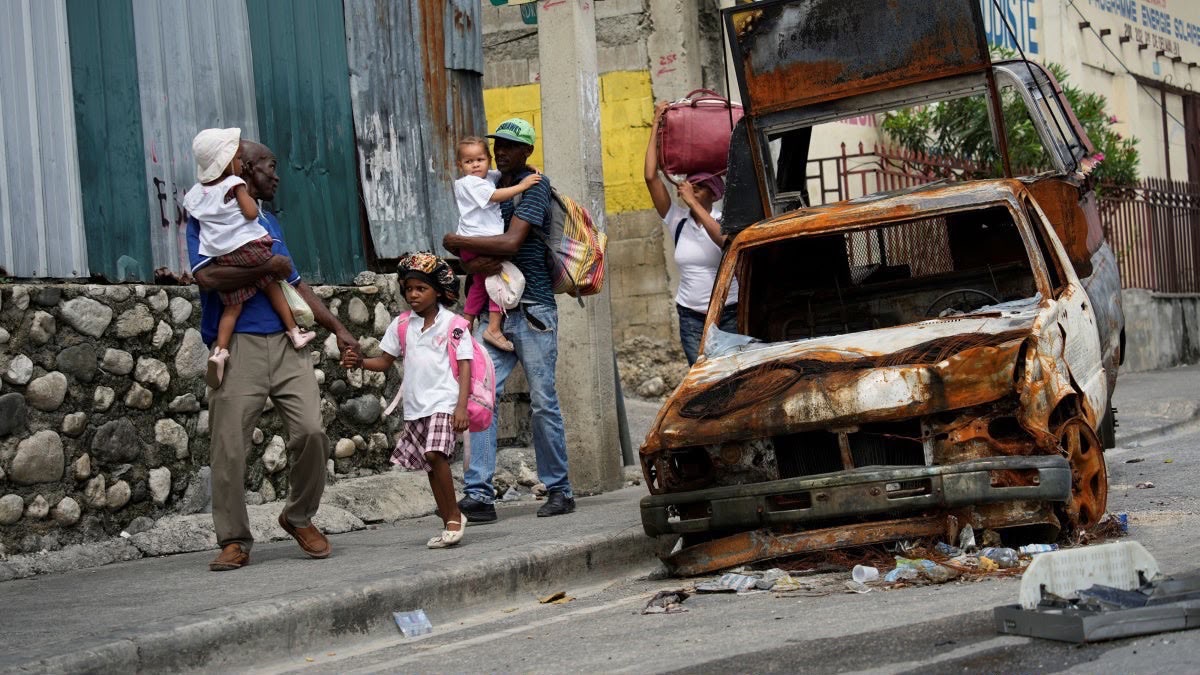
Port-au-Prince, le 9 avril 2026.- Alors que l’UNESCO lance son « Compte à rebours vers 2030 « , le constat est sans appel : si l’accès à l’éducation explose mondialement avec 1,4 milliard d’élèves, les disparités s’élargissent. Pour Haïti, engluée dans une instabilité chronique, l’enjeu n’est plus seulement de scolariser, mais de sauver un système où l’équité et l’inclusion restent des idéaux lointains face à l’urgence sécuritaire.
The paradox of numbers: a global leap, a national challenge
Since 2000, the world has experienced a silent revolution: enrolment in primary and secondary education has increased by 30%, while post-secondary education has exploded by 161%. Yet, behind these encouraging statistics of the Global Monitoring Report on Education (GEM) 2026, the Haitian reality is astonished. In a country where physical insecurity threatens daily access to classrooms, « road travelled » is a battle for survival more than for statistics.
Fairness, the weak link
The UNESCO report highlights countries that have reduced gender, wealth and disability disparities. For Haiti, the challenge is twofold. The concentration of resources in urban areas and the predominance of the private sector (over 80 per cent of schools) create a financial barrier for the poorest families. The equity index proposed by UNESCO reveals an urgent need: without a deliberate reallocation of public resources to the most vulnerable, inclusive education will remain a theoretical concept.
Beyond « good practices » Policy coherence
Rather than copying foreign models, the report advocates coherence between national policies and responsiveness to external shocks. For Haitian decision makers, this means adapting the curriculum and school calendar to a reality of permanent crisis. Long-term success will not come from isolated reforms, but from a firm political commitment to protect schools as inviolable sanctuaries.
2030: The last call
This 2026 edition is only the first part of a trilogy assessing the access, quality and relevance of education. For Haiti, the 2030 deadline is a mirror tensed to its own shortcomings, but also an opportunity to use the data from the PEER website to reform its legislation on inclusive education. The UNESCO message is clear: every story counts, and that of the children of Haiti can no longer be written on the margins of global progress.
W.A.