Port-au-Prince, March 8, 2026.- At the heart of a controversy over the disbursement of 150 million gourdes of public funds in 2025, Quisqueya University claims that this funding was obtained legally and transparently. In a public note published on March 8, 2026, the institution explains that this support from the Haitian state is part of a legal framework and aims to face serious financial difficulties related to the national crisis.
The Quisqueya University (UniQ) came out of silence to clarify the conditions under which it received public funding in 2025, following the publication of a report by the Je Klere Foundation (FJKL) evoking disbursements totalling 150 million gourdes in favour of the institution.
In its report released on 4 March 2026, the FJKL states that these funds were paid through three separate payments, under the administration of the former Minister of Economy and Finance, Alfred Fils Métellus. The citizen watch organisation considers that these transfers raise questions as to their justification, legal basis and procedures leading to their disbursement.
Quisqueya University evokes a legal framework
In a public note dated 8 March 2026, Quisqueya University states that this funding is within a legal and transparent framework provided for in the decree of 11 March 2020 on the operation and modernization of higher education in Haiti, in particular articles 194 and 195 on incentives for private higher education and research.
The institution states that this financial support was requested as early as December 2022, as part of a formal funding search with different partners.
The university also rejects interpretations presenting this funding as personal support to its president. She recalls that she is a recognized non-profit higher education institution of public utility, whose main mission is to train managers, develop scientific research and serve the community.
A university weakened by the crisis
In its note, Quisqueya University explains that its financial situation deteriorated considerably as a result of the economic and security crisis in the country.
The institution states that its student staff has increased from over 3,500 students for the 2018-2019 academic year to just over 850 last year. At the same time, tuition revenues fell from US$4.3 million to less than $600,000, resulting in a significant deficit.
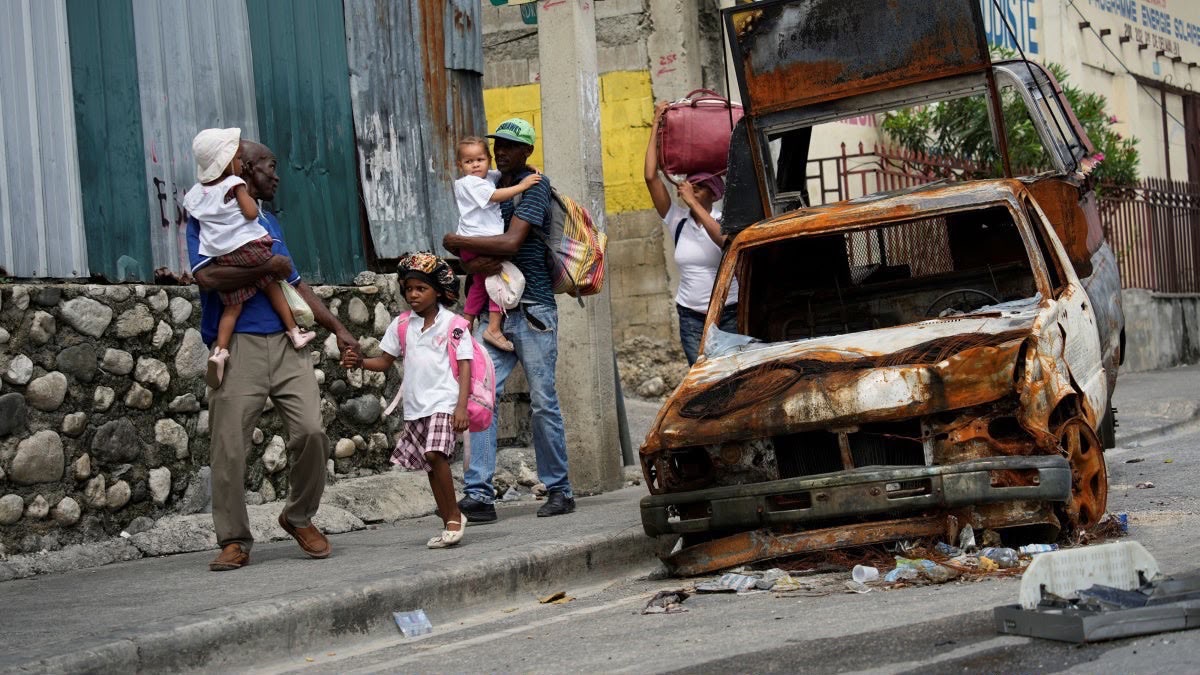
The security situation in the neighbourhoods of Turgeau and Pacot, where the university is located, would also have contributed to this drastic decline in enrolment.
According to the institution, public funding was granted following a memorandum of understanding signed on 20 May 2025 with the Ministry of Economy and Finance, following the request made in 2022. The university claims to have transmitted to the authorities several narrative and financial reports on the use of funds, notably on 24 July and 31 October 2025, as well as a final report on 15 December 2025.
The debate on the financing of higher education
The issue of public funding of universities is taking place in a broader context of weakening the higher education sector in Haiti.
According to Professor Guichard Doré, the Haitian state devoted 3.5 billion gourdes to the functioning of the State University of Haiti (UEH) in 2025 to support the country's main public higher education institution.
At the same time, several private universities face significant financial difficulties in meeting their operating costs, in a context of economic crisis and instability.
For the authorities, the support of the UEH remains essential in order to preserve a quality public university, considered as a pillar of higher education and national development.
Towards a national debate on higher education
In its note, Quisqueya University believes that state support for private higher education institutions is a common practice in several democracies. It also calls for the opening of a national debate on the governance and financing of higher education, in order to develop a strategy for the development and rationalization of the sector in Haiti.
Despite the difficulties, the institution says it wants to continue its training and research mission, while strengthening its partnerships for higher education and development in the country.
W.A.