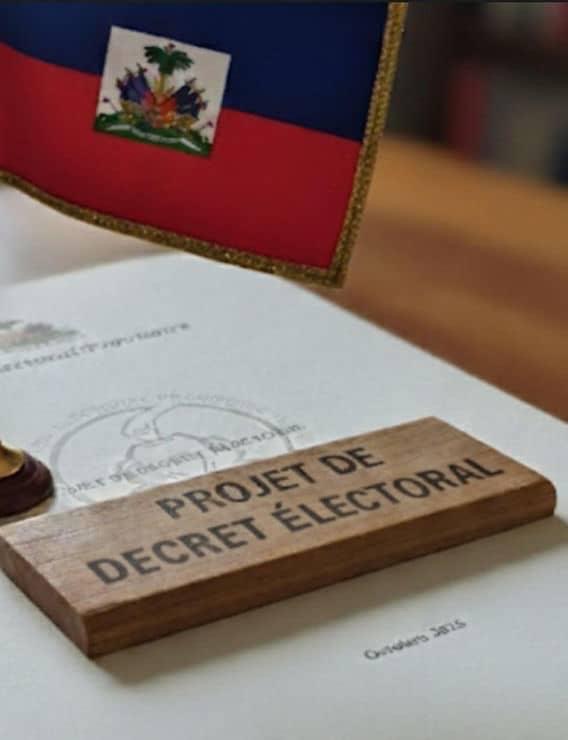
Port-au-Prince, May 14, 2026.- A few days before the announced adoption of the electoral decree, a contradiction broke out in the transitional government. While de facto Prime Minister Alix Didier Fils-Aimé publicly defends Article 139, which imposes 30,000 members of political parties to participate in the elections, the Secretary of State for Communication Patrick Crispin states that this provision will be withdrawn in order to preserve « Inclusion » the electoral process. Two opposing speeches that raise questions about the real direction taken by the executive a few months from the announced elections.
The political climate is centred around the future electoral decree. In an interview with Le Nouvelliste on May 9, de facto Prime Minister Alix Didier Fils-Aimé assured that the text would be adopted « next week » Council of Ministers.
At the heart of the debate is article 139 of the draft electoral decree, which requires political parties to list 30,000 members, members or supporters in order to be able to present candidates in the next elections.
Pour le chef du gouvernement, cette mesure vise à réduire la prolifération des partis sans véritable base populaire. Selon lui, il est nécessaire de démontrer une représentation minimale avant d’être autorisé à figurer sur les bulletins de vote. Il estime même que le seuil de 30 000 membres pourrait être « trop bas « .
« Avoir trop de choix n’est pas nécessairement ce qu’il faudrait « , a déclaré le Premier ministre, plaidant pour des élections présidentielles limitées à une dizaine ou une quinzaine de candidats sérieux.
Mais coup de théâtre le lundi 11 mai. Intervenant sur les ondes de Radio Métropole, le secrétaire d’État à la Communication Patrick Crispin a pris le contre-pied du chef du gouvernement en annonçant le retrait de l’article 139. Selon lui, cette décision vise à « garantir l’inclusion et maintenir la dynamique électorale « .
This public contradiction reveals obvious differences within the executive on the organisation of the next elections. Between the desire to restructure the political landscape and the need to ensure broad participation, the debate on Article 139 is already becoming one of the first major political confrontations in the electoral process of 2026.
W.A.