©️AFP
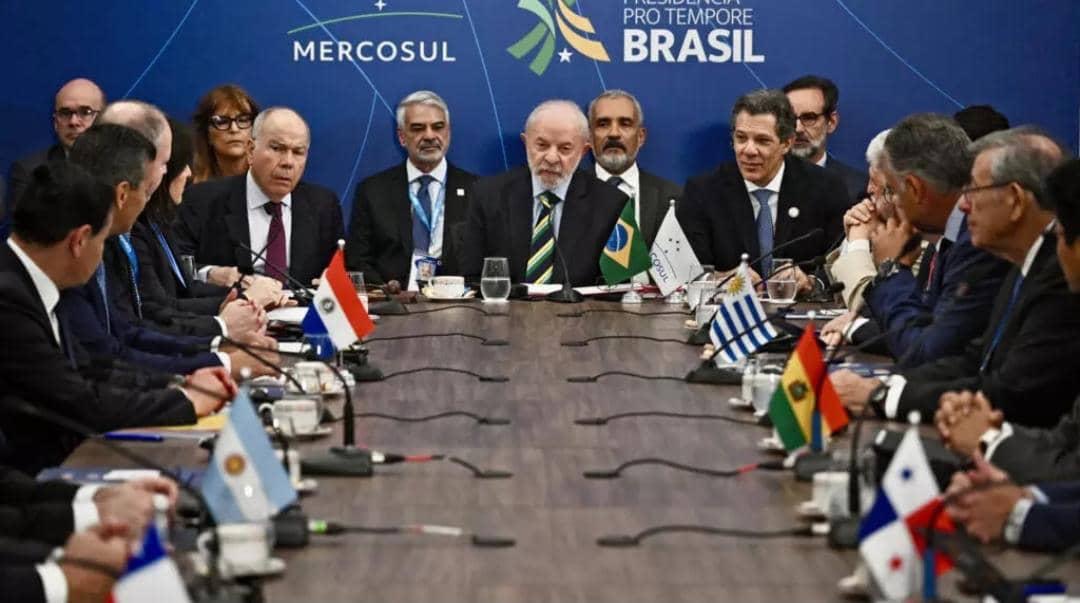
Meeting in Foz de Iguaçu on 20 December, Brazilian President Luiz Inácio Lula da Silva urged the European Union to show « political courage » to finalize the EU-Mercosur free trade agreement, after a further postponement of signature. Despite 26 years of negotiations and concessions from the South American bloc, European reluctance, particularly in connection with agricultural protests, is still hampering the conclusion of the Treaty.
À l’ouverture du sommet du Mercosur, Lula da Silva a dénoncé l’enlisement d’un accord jugé « équilibré » par les pays sud-américains. « Sans volonté politique et sans courage, il sera impossible de conclure une négociation qui dure depuis 26 ans « , a-t-il martelé, rappelant que le Mercosur avait accepté des quotas agricoles et un mécanisme de sauvegarde, tout en préservant la réciprocité.
The Brazilian President, however, mentioned a window of opportunity: a letter received from the Presidents of the European Commission and the European Council, expressing hope for approval in January. Initially expected this Saturday, the signing was delayed in the face of pressure from European farmers, particularly in France and Italy, where protests broke out against the increased opening of the European market to South American agricultural products.
If Paris still judges « too soon » Lula believes that France cannot block the agreement alone. He also claims that the head of the Italian government, Giorgia Meloni, would be ready to accept him in early January. On the Mercosur side, impatience is growing: Paraguay, which is about to take up the rotating presidency of the bloc, warned that South American patience has limits, while no official date was confirmed for a signature in January.
The EU-Mercosur agreement would further open the South American market to European exports: vehicles, machinery, wines and spirits, while facilitating access to the European market for meat, sugar, rice, honey and soy in Mercosur, a major crunch for the EU's agricultural sectors.
W.A. with AFP